

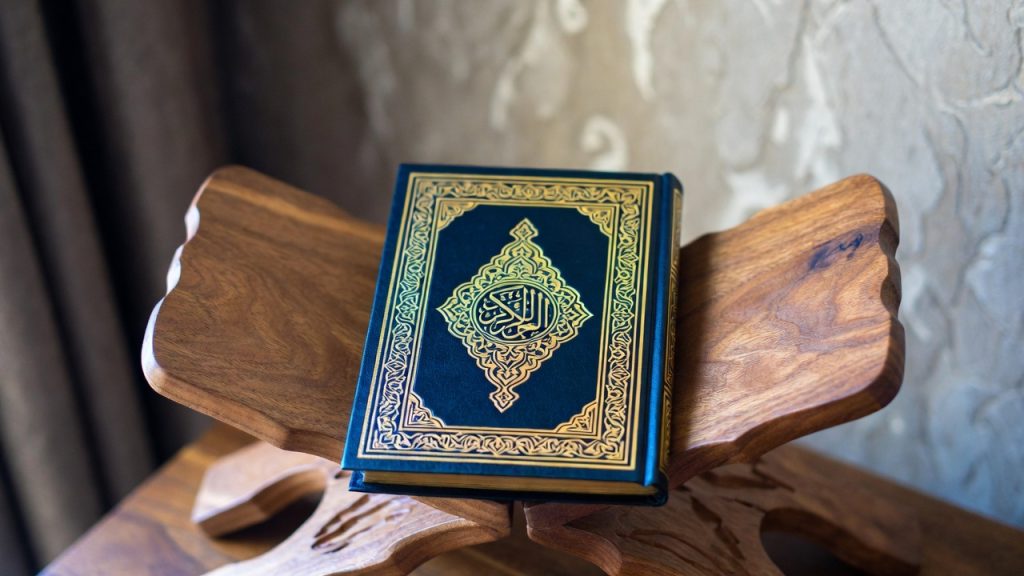
Which Verses in the Quran Contradict Each Other? Claims that some verses in the Quran contradict each other circulate on social media, creating a need for a detailed analysis of these supposedly contradictory verses.
Are There Contradictions in the Verses Regarding Alcohol?
Some critics present the gradual prohibition of alcohol as a contradiction.
While one verse discusses the benefits and harms of alcohol (Al-Baqara 2:219), another states that one should not approach prayer while intoxicated (An-Nisa 43), and finally, it is explicitly forbidden (Al-Maidah 90).
This is referred to as “gradualism” (phased approach) in Islamic law. The clarification of the ruling over time is not seen as a contradiction, but rather as a strategy for societal transformation.
Are There Contradictions Regarding the Timeframe for the Creation of the Universe?
Some interpretations claim that the number of days contradicts each other.
While many verses state that the universe was created in 6 days (Al-A’raf 54), it is claimed that when the detailed breakdown in Surah Fussilat (9-12) is added up, it can add up to 8 days.
Experts in Tafsir (Quranic exegesis) state that the 2 days of earth creation in Surah Fussilat are included in the 4 days of food/provision distribution, thus the total still equals 6 days.
Is There a Contradiction Regarding Compulsion in Religion?
It is argued that there is a contradiction between the verse “There is no compulsion in religion” (Al-Baqara 256) and the “Verse of the Sword,” which contains a command to wage war or to kill polytheists wherever they are seen (At-Tawbah 5).
Islamic scholars argue that the principle “there is no compulsion in religion” means that no one can be forced to believe in their heart; and that the verses about war relate not to belief, but to political aggression and breach of treaties.
Is There a Contradiction Regarding the Authority of Intercession?
While some verses state that intercession belongs solely to Allah and that no one will be able to help anyone else on that day (Surah Al-Baqarah 48, Surah Az-Zumar 44), others indicate that only those whom Allah permits can intercede (Surah Maryam 87, Surah Taha 109).
This reconciles the idea that intercession is not an independent power, but rather a grace entirely dependent on Allah’s permission and approval.