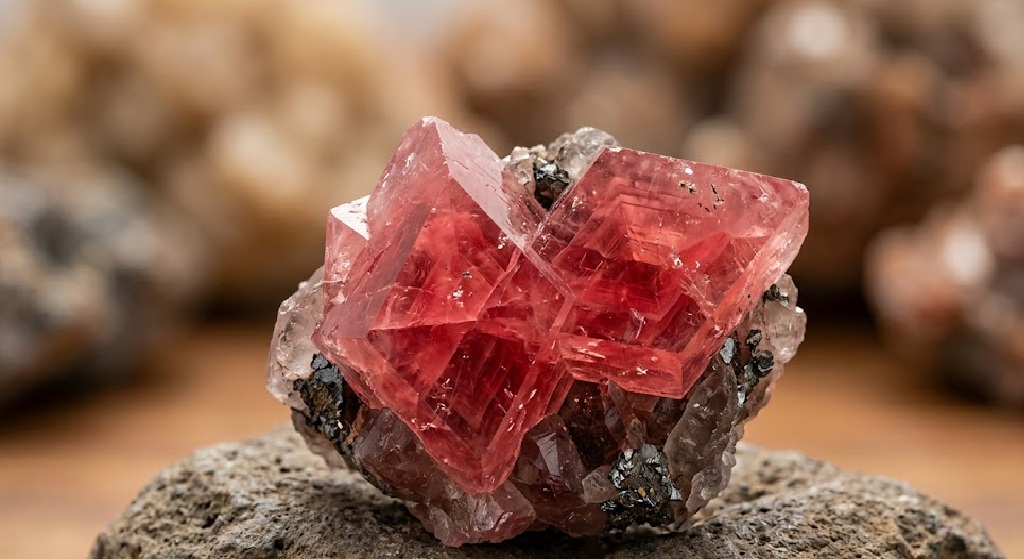
Among the vast treasury of the Earth’s geological wonders, few minerals possess the sheer visual magnetism and poetic allure of Rhodochrosite. Known scientifically as a manganese carbonate mineral, its name is derived from the Greek words rhodon (rose) and chros (color), a fitting tribute to its stunning palette of pink and deep red hues. Often referred to as the “Inca Rose,” this gemstone is not merely a collection of chemical bonds; it is a cultural icon, a geological marvel, and a symbol of emotional healing that has fascinated humanity for centuries. From the high-altitude mines of Argentina to the mineral collections of world-class museums, Rhodochrosite stands as a testament to the Earth’s ability to create art through heat and pressure.
Geological Formation and Where Rhodochrosite is Found
The formation of Rhodochrosite is a slow, methodical process that occurs in hydrothermal veins and sedimentary environments. When manganese-rich fluids interact with carbonate minerals in the absence of oxygen, the striking pink crystals begin to take shape. While it is found in several locations globally, including South Africa, China, and the United States, the most famous deposits are found in the Andes Mountains of Argentina. In these ancient caves, stalactites and stalagmites of Rhodochrosite have grown over millennia, revealing concentric, lace-like bands when sliced. These patterns, ranging from creamy white to vibrant raspberry, act as a chronological record of the mineral’s growth, making every specimen a unique piece of natural history.
The History and Legend of the Inca Rose Stone
The cultural significance of Rhodochrosite is deeply rooted in South American folklore. According to legend, the Incas believed that the stone was the solidified blood of their ancestral kings and queens. It was seen as a sacred talisman of love and sacrifice, hidden deep within the mountains to protect the spirit of the empire. This connection to the “Inca Rose” persists today, as Argentina has officially declared Rhodochrosite its national gemstone. Unlike diamonds or emeralds, which often represent status and wealth, Rhodochrosite has historically been associated with the heart and the soul, carrying a weight of tradition that elevates it beyond a mere decorative object.
Colorado Rhodochrosite: The Rare Sweet Home Mine Crystals
While the banded, stalactitic form is popular in jewelry, the world of fine mineral collecting treasures a different variety: the rhombohedral crystal. The most prestigious source for these transparent, deep red gems is the Sweet Home Mine in Alma, Colorado. Discovered in the late 19th century, this mine has produced the “Alma King,” one of the most famous mineral specimens in existence. These crystals are prized for their perfect geometric shapes and intense, candy-red saturation. Because high-quality, gem-grade Rhodochrosite is exceptionally rare and difficult to facet due to its relative softness, these specimens are often kept in their natural state, serving as the crowning jewels of private and public collections alike.
Rhodochrosite Meaning and Metaphysical Healing Benefits
Beyond its physical beauty, Rhodochrosite has carved out a significant niche in the world of holistic wellness and metaphysics. Often called the “Stone of the Compassionate Heart,” it is believed by practitioners to integrate physical and spiritual energies. Many seek out the stone for its supposed ability to heal old emotional wounds, promote self-love, and encourage a positive outlook on life. Whether one believes in the vibrational energy of stones or not, the psychological impact of its warm, nurturing color is undeniable. The soft glow of a polished Rhodochrosite cabochon seems to radiate a sense of calm, making it a favorite for those who use gemstones as focal points for meditation and stress relief.
Caring for Rhodochrosite Jewelry and Gemstones
In the world of lapidary arts, Rhodochrosite presents a unique challenge for artisans. With a hardness of only 3.5 to 4 on the Mohs scale, it is significantly softer than quartz or sapphire, requiring a steady hand and immense patience to cut and polish. Jewelers often set the stone in protective mountings, such as pendants or earrings, rather than rings, to prevent scratches and damage. Despite its fragility, the demand for Rhodochrosite jewelry continues to grow, driven by a modern appreciation for organic patterns and “earthy” aesthetics. Each piece of jewelry serves as a wearable fragment of the Earth’s mantle, a delicate balance of vulnerability and enduring beauty.
The Value and Future of This Crimson Mineral
As we look toward the future of gemstone appreciation, Rhodochrosite remains a pillar of the mineralogical world. It bridges the gap between the scientific curiosity of geologists and the aesthetic passion of artists. Its rarity, particularly in its deep red crystalline form, ensures that it will remain a highly sought-after treasure for generations to come. More than just a mineral, Rhodochrosite is a reminder of the hidden beauty beneath our feet—a rose that blooms in the dark, silent depths of the mountains, waiting to be brought into the light. Whether viewed as a historical relic, a spiritual guide, or a geological wonder, it continues to capture the imagination of all who behold its crimson glow.