Non-Surgical Solutions for Vasomotor Rhinitis
For millions, the simple act of breathing through the nose is a daily struggle. While allergic rhinitis is a well-known culprit, a large number of people suffer from its less-famous sibling: Vasomotor Rhinitis (VMR). Characterized by chronic nasal congestion, a persistent runny nose, or post-nasal drip without a clear allergic or infectious cause, VMR can significantly impact a person’s quality of life. The good news is that for many, effective relief is possible without turning to surgery. This article explores a comprehensive range of non-surgical treatments to help you regain control and breathe easier.
Understanding Your Stuffy Nose: What is Vasomotor Rhinitis?
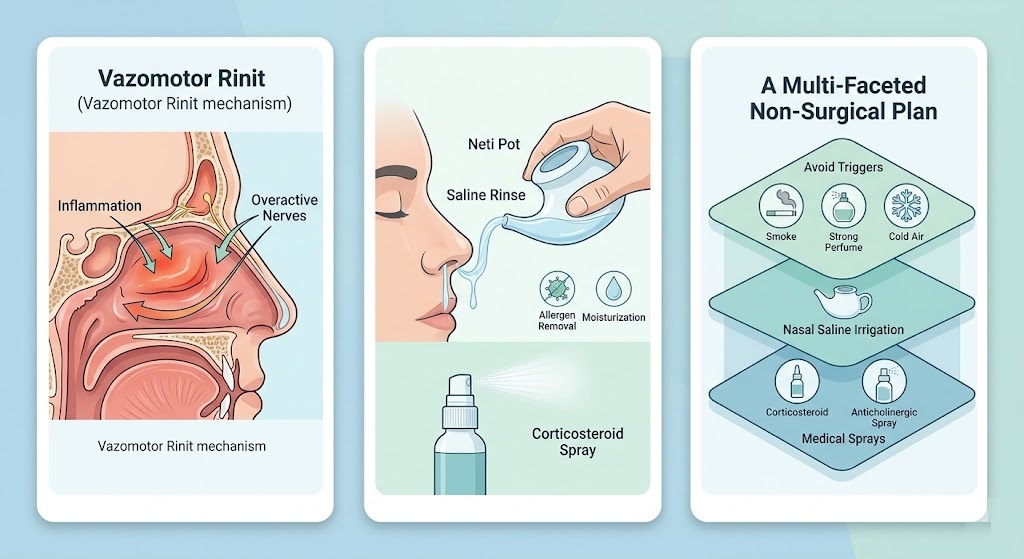
Before diving into treatments, it’s helpful to understand what VMR actually is. Unlike allergic rhinitis, which is triggered by specific substances like pollen or pet dander, VMR is often described as a functional problem. It involves an overreaction of the blood vessels and mucus glands in the nasal lining. Essentially, the nerves that control these functions are hyperactive. Common triggers include sudden temperature or humidity changes, strong odors (perfumes, cleaning products), tobacco smoke, environmental pollution, spicy foods, alcohol, and even stress or emotional turmoil. It’s important to see a specialist, usually an allergist or an ear, nose, and throat (ENT) doctor, to rule out other conditions and get a firm diagnosis.
The Foundation of Management: Identifying and Avoiding Triggers
The first line of defense against VMR is to figure out what triggers your symptoms and avoid them whenever possible. Keeping a symptom diary can be incredibly useful. Note down what you were doing, eating, or exposed to when your symptoms flared up.
- Environmental Adjustments: If temperature shifts are a problem, try to dress in layers. Use a humidifier in your home, especially during the dry winter months, to keep your nasal passages from drying out, which can worsen symptoms.
- Avoid Irritants: Steer clear of environments filled with tobacco smoke, strong chemical fumes, or intense perfumes.
- Dietary Adjustments: Pay attention to how spicy foods or alcohol affect you and limit them if they are clear triggers.
While avoidance is not always complete, making conscious changes can dramatically reduce the frequency and severity of your episodes.
Topical Corticosteroids: A Primary Non-Surgical Defense
Nasal corticosteroid sprays are considered the most effective long-term, non-surgical treatment for chronic rhinitis, including VMR. They are “controller” medications, not “rescue” medications, meaning they don’t provide immediate relief but work over time to reduce inflammation and stabilize the nasal lining. Commonly prescribed options include fluticasone, mometasone, and budesonide. Regular use, exactly as prescribed, is key to their effectiveness. It may take several days or even weeks of consistent use to see the full benefit. While they are safe for long-term use under medical supervision, potential side effects can include nasal dryness or minor nosebleeds.
The Direct Approach: Anticholinergic Nasal Sprays for Running Nose
While corticosteroids target the overall inflammation, they are not always the best solution for a constant, watery runny nose. This is where anticholinergic nasal sprays, specifically ipratropium bromide, come into play. This medication works by directly inhibiting the gland cells in the nasal lining from producing mucus. It is an “anti-secretory” agent, and it can be highly effective for controlling a dripping nose and post-nasal drip. This spray can be used on its own or in combination with other treatments. A common side effect is localized nasal dryness.
Antihistamines: A Supporting Role, Not a Star
Antihistamines are the go-to treatment for allergic rhinitis, but their role in VMR is more limited. This is because VMR does not involve histamine release, which is the primary driver of allergic symptoms. However, first-generation (older) oral antihistamines like diphenhydramine can have a drying effect that may help slightly with a runny nose, but they often cause significant drowsiness. Second-generation (newer), non-sedating oral antihistamines are generally not effective for VMR. Nasal antihistamine sprays, like azelastine, can be somewhat more useful by reducing nasal nerve sensitivity, providing a more direct effect on the symptoms without the full-body sedative effects.
The Power of a Cleanse: Nasal Saline Irrigation
Nasal saline irrigation is a simple, inexpensive, and incredibly effective non-surgical treatment that should be part of almost everyone’s VMR management plan. It works by mechanically cleansing the nasal cavity, removing irritants, mucus, and airborne particles that can trigger a reaction. It also helps to moisturize the nasal lining. You can use a Neti pot, a squeeze bottle, or a pre-filled canister to gently flush a salt-water solution (prepared with distilled or boiled-and-cooled water) through your nasal passages. Regular use, once or twice daily, can provide significant relief and improve the effectiveness of other nasal sprays.
Emerging and Complementary Non-Surgical Therapies
For those whose symptoms remain difficult to control with conventional therapies, a few emerging and complementary non-surgical options exist:
- Capsaicin Nasal Spray: Research has shown that the compound that makes chili peppers hot can, when applied in a specific, medical-grade formulation as a nasal spray, desensitize the overactive nerves in the nasal lining. It’s a localized treatment that requires several applications over a short period and can provide relief for weeks to months.
- Botulinum Toxin Injections: When injected into certain areas of the nasal cavity, botulinum toxin (Botox) can block the release of a neurotransmitter (acetylcholine) that stimulates mucus production. This can provide relief for several months from a severely runny nose.
- Alternative Approaches: Some people find relief with alternative therapies like acupuncture, although scientific evidence for their effectiveness in VMR is less robust.
Conclusion: Adopting a Multi-Faceted Non-Surgical Approach
Managing Vasomotor Rhinitis is often about finding the right combination of tools. There is rarely a single “cure.” For most individuals, non-surgical approaches are highly effective. A successful management plan usually starts with trigger avoidance and the regular use of nasal saline irrigation, often combined with a topical corticosteroid spray for congestion and post-nasal drip, and an anticholinergic spray if a runny nose is the main problem. By working closely with a healthcare professional to tailor these non-surgical solutions to your specific symptoms and triggers, you can significantly reduce the impact of VMR and enjoy a life of clearer breathing.
References
Medical Definitions and Pathophysiology
- Settipane, R. A., & Kaliner, M. A. (2013). Nonallergic Rhinitis. American Journal of Rhinology & Allergy. This source defines the functional nature of Vasomotor Rhinitis as an overreaction of the nasal lining’s blood vessels and mucus glands.
- National Institute of Allergy and Infectious Diseases (NIAID). Understanding the difference between allergic and non-allergic rhinitis triggers, such as temperature, humidity, and strong odors.
Non-Surgical Pharmacotherapy
- Sur, D. K., & Plesa, M. L. (2015). Treatment of Rhinitis. American Family Physician. Provides clinical evidence for the use of topical corticosteroids (fluticasone, mometasone) as a primary long-term defense.
- Wheeler, P. W., & Wheeler, S. F. (2005). Vasomotor Rhinitis. American Family Physician. Details the use of anticholinergic nasal sprays like ipratropium bromide specifically for rhinorrhea (runny nose).
- Scadding, G. K. (2001). Other forms of rhinitis: Non-allergic rhinitis. Immunology and Allergy Clinics of North America. Explains the limited role of second-generation antihistamines in treating VMR.
Mechanical and Complementary Treatments
- Papsin, B., & McTavish, A. (2003). Saline nasal irrigation: Its role as an adjunct treatment. Canadian Family Physician. Validates the mechanical cleansing and moisturizing benefits of saline irrigation.
- Gevorgyan, A., et al. (2015). Capsaicin for non-allergic rhinitis. Cochrane Database of Systematic Reviews. Discusses the desensitization of overactive nasal nerves using medical-grade capsaicin.
- Rohrbach, S., et al. (2001). Botulinum toxin type A in treatment of bilateral nasal hypersecretion. ORL. Evaluates the effectiveness of Botox injections for severe mucus production.
Environmental and Lifestyle Management
- World Allergy Organization (WAO). Guidelines on environmental adjustments and the importance of symptom diaries in identifying non-allergic triggers like smoke and pollution.