
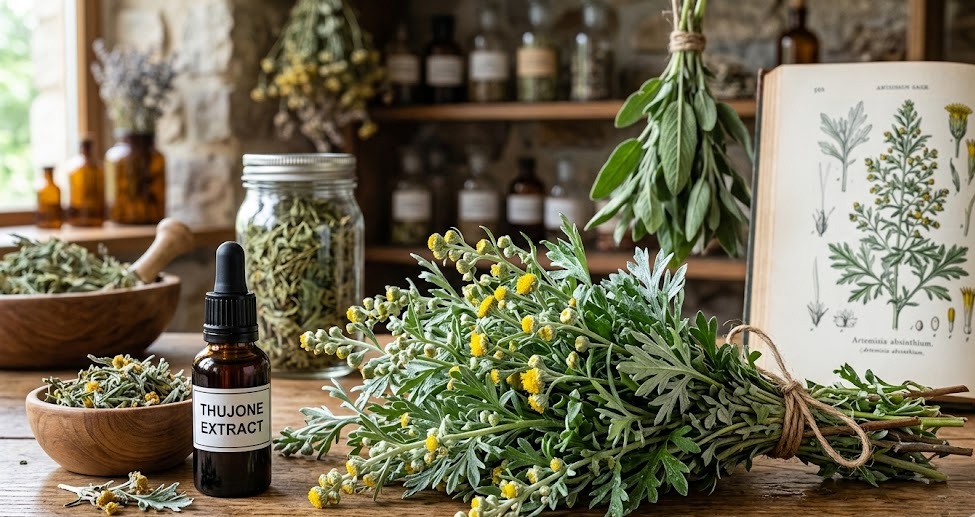
When used in controlled, therapeutic amounts—primarily through herbal teas or essential oils—thujone is associated with several traditional and studied benefits.
Cognitive and Memory Support
Research suggests that sage extracts containing thujone may improve word recall, alertness, and overall secondary memory performance.
Digestive Aid
The bitter compounds increase the secretion of digestive enzymes and bile, aiding in the breakdown of heavy meals.
Antimicrobial and Antifungal Effects
Essential oils rich in thujone are often used in traditional medicine to treat minor skin infections or as a preservative agent.
Antiparasitic Properties (Vermifuge)
Thujone is toxic to certain intestinal parasites, such as roundworms and pinworms. This led to its historical use as a deworming agent in both human and veterinary medicine.
Anti-inflammatory and Emmenagogue Effects
In topical applications (like ointments), thujone-containing oils can help increase blood flow to the area, acting as a counter-irritant to reduce muscle pain.
It is traditionally used as an emmenagogue, a substance that stimulates or increases menstrual flow, which was historically used to treat irregular cycles.
Important Safety Warning
Because it can stimulate uterine contractions, thujone-containing supplements or concentrated oils must be strictly avoided during pregnancy.
In high concentrations, thujone is a neurotoxin that can cause muscle spasms, tremors, and seizures.
References
Kennedy, D. O., & Scholey, A. B. (2006). “Sage and Brain Function.” CABI Digital Library.
Perry, N. S., et al. (2003). “Salvia lavandulaefolia (Spanish sage) health benefits and cognitive performance.” Journal of Clinical Pharmacy and Therapeutics.
European Journal of Plant Pathology (2021). “α-Thujone exhibits an antifungal activity against F. graminearum by inducing oxidative stress.”
Tsiri, D., et al. (2009). “Chemosystematic value of the essential oil composition of Thuja species—Antimicrobial activity.” Molecules.
Journal of Ethnopharmacology (2020). “Bioactive Compounds and Pharmacological Actions of Wormwood (Artemisia absinthium).”
Scientific Committee on Food (SCF), European Commission (2002). “Opinion of the Scientific Committee on Food on Thujone.”
Höld, K. M., et al. (2000). “α-Thujone (the active component of absinthe): γ-Aminobutyric acid type A receptor modulation.” Proceedings of the National Academy of Sciences (PNAS).
European Medicines Agency (EMA). “Public statement on the use of herbal medicinal products containing thujone.”
[…] Kaynaklar […]